

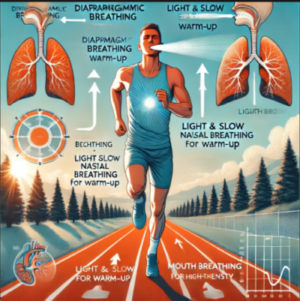
Breathing is one of the most crucial yet overlooked aspects of marathon running. Efficient breathing not only enhances endurance but also improves running performance and reduces fatigue. By training your lungs and practicing structured techniques, marathon runners can maximize oxygen intake, maintain rhythm, and stay strong over long distances.
1. Monitor Your Respiratory Rate (RR) Before Running
Your respiratory rate (RR)—the number of breaths per minute—directly reflects your efficiency.
- A normal RR at rest is typically below 20 breaths per minute.
- If your RR is higher, it may indicate poor breathing mechanics or limited lung efficiency.
👉 Pro Tip: Start each training session by checking your RR. Practicing controlled breathing before you run helps regulate your body and improves performance over time.
2. Functional Breathing: Light, Slow, and Deep (LSD)
Functional breathing calms the nervous system and improves oxygen utilization. This technique is particularly effective as part of a warm-up or cool-down.
- Inhale slowly through your nose: Deep, but without straining.
- Exhale slowly through your nose: Keep it steady and calm.
Over time, light, slow, deep breathing builds lung efficiency and sets the tone for long-distance runs.
3. Diaphragmatic (Belly) Breathing
Chest breathing limits oxygen intake, but diaphragmatic breathing engages the lower lungs for maximum oxygen absorption.
- Inhale deeply through your nose, expanding your belly outward.
- Exhale gently, letting your belly contract naturally.
Benefits for marathon runners:
✅ Enhances oxygen exchange
✅ Reduces strain on chest and shoulders
✅ Improves endurance over long distances
Practice Tip: Incorporate belly breathing during easy runs to make it second nature.
4. The Five Gears of Breathing for Runners
Marathon runners need to adapt their breathing as intensity changes. Think of breathing in “gears”:
- In through Nose, Out through Nose (Paced): Best for warm-ups and easy runs.
- In through Nose, Forced Exhale through Nose: Expels excess CO₂ during moderate efforts.
- Forced Inhale through Nose, Paced Exhale through Nose: Ideal for steady, tempo-paced runs.
- In through Nose, Out through Mouth: Useful for high-intensity efforts when nasal breathing alone isn’t enough.
- In through Mouth, Out through Mouth: Reserved for sprints, hill climbs, or final pushes in a marathon.
👉 Strategy: Start with nasal breathing and shift gears as your effort increases. This progression helps regulate intensity and keeps you composed throughout your marathon training and race.



Leave a Reply